
- DRS Links
- Membership
- DRS Conference
- Media Releases
- Policies
Welcome to the Doctors Reform Society of Australia
The Doctors Reform Society (DRS) is an organisation of doctors and medical students promoting measures to improve health for all, in a socially just and equitable way. The Society was formed in 1973 to support a proposal for a publicly-funded universal health insurance system. Medibank (now Medicare) was successfully created despite opposition from the Australian Medical Association.
All members’ views are valued, open debate on all health issues is encouraged both within and outside the organisation, and consensus decision making is the norm. The DRS functions as a medico-political think tank, a lobby group and a public resource centre.
50 years Anniversary Doctors Reform Society Conference and AGM.
NSW Nurses and Midwives Association Building
50 O’Dea Ave Waterloo NSW
Face to face and zoom.
Saturday 9th November 9.30 am – 5.00 pm
AGM in after lunch session
Zoom attendance will be available.
Please email drs@drs.org.au for zoom link (available from 1 November)
The zoom link will be circulated to DRS mailing list.
If you are attending the conference in person, please advise us at drs@drs.org.au
Further program information to follow closer to the event.
There will be a Conference dinner held at a location in Surry Hills on the evening of November 9.
The location is close to Central Railway Station and will be advised at the AGM.
It will be in proximity to The Friendly Society Hall where our first meeting was held.
Please let us know if you will be attending for catering numbers.
Any queries to drs@drs.org.au
Join the DRS
Membership of the Doctors’ Reform Society is open to all medical practitioners and medical students who believe that everyone, regardless of their social or economic status, should have access to high quality healthcare.
Click here to find out more about membership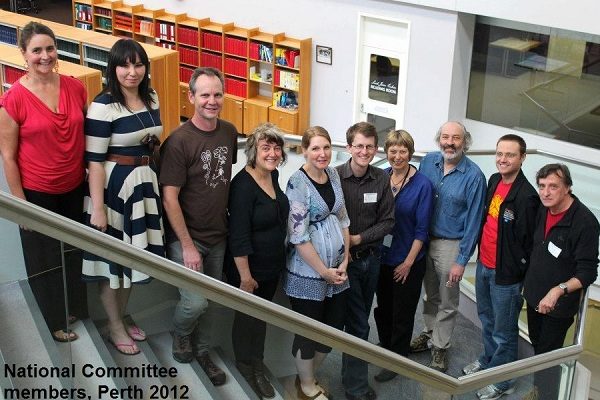
Report on National Conference October 2019, Brisbane
We started the day with a talk from Dr Beau Frigault from Doctors for the Environment, who gave an overview of the disaster we are heading for but then concentrated on the significant contribution of the health care system particularly hospitals, makes to greenhouse gas emissions. He then outlined (in between torrential Brisbane rain on the tin roof) a wide variety of measures that hospitals are implementing to address this, both in the design of new hospitals and in retrofitting older hospitals but also indicated relatively simple changes such as using different anaesthetic gases eg servoflurane instead of desflurane which can also help significantly. The emphasis however was that for change to happen in established hospitals a commitment to fund a dedicated person to the task is required.
We then had a fascinating and eclectic talk from Dr Andrew Gunn about how he manages to provide health care to about 500 patients who are mainly living in hostels, are all significantly disadvantaged, with a major contribution from mental illness. He referred also to two other examples of doctors who have set up systems to deal with the most disadvantaged and provide them with the health care they deserve and would seldom receive from standard GP practices, the first in Perth where the emphasis is on addressing homelessness as a major contributing cause of disadvantage, the second in Melbourne where, with the benefit of Community Health Centres carrying on from their beginnings as a Whitlam initiative, provide comprehensive care across many inner city Melbourne suburbs.
The afternoon started with a talk from Ben Cohn from the Australian Digital Health Agency, giving us an update on how it is progressing. The best we could establish from him was that the ADHA was continuing to play with the data they had, but had not really made much progress in terms of meaningful and useful engagement with either health care providers or patients to make My Health Record a particularly useful product. Nor was there any indication that the ADHA had understood the concerns regarding patient control of the information which we and others have raised previously.
The day ended with our AGM and reappointment of the previous committee unchanged, and we then proceeded to an excellent vegan meal nearby.
Next year we plan to meet in Western Australia
Read more here